
News
A Timeline of the Naomi Osaka–Press Conference Controversy


Following her withdrawal from the 2021 French Open to protect her mental health, the four-time Grand Slam champion Naomi Osaka has received immense amounts of both pushback and praise. On social media, she opened up about how she has struggled with depression and anxiety for years, which the post-match press conferences have contributed to. Osaka has since withdrawn from the ongoing Wimbledon Championships as well, but she will be competing at the upcoming Tokyo Olympics. Read on to find out how this controversy unfolded.
May 26: Osaka announces that she will not be participating in press conferences at the French Open.
Explaining her decision, Osaka described on Twitter how the mental health of athletes is often disregarded by the press. “We’re often sat there and asked questions that we’ve been asked multiple times before or asked questions that bring doubt into our minds and I’m just not going to subject myself to people that doubt me,” she wrote. Osaka continued that after a player loses a match, the post-match press conference questions end up feeling like “kicking a person while they’re down.”
Osaka knew that she would be fined “a considerable amount” for her decision, but she specifically called out how the tennis organizations “continue to ignore the mental health of the athletes that are the centerpiece of their cooperation [sic]” while still expecting athletes to talk to the press.
May 30: Osaka is fined $15,000 by all four Grand Slam tournaments.
In a joint statement by all four Grand Slam tournaments — Roland Garros, Wimbledon, the Australian Open and the US Open — Osaka was fined $15,000 for not appearing at a press conference after her first-round win at the French Open. Post-match press conferences are currently mandatory for all players, no matter whether they win or lose.
“Naomi Osaka today chose not to honour her contractual media obligations. The Roland-Garros referee has therefore issued her a $15,000 fine, in keeping with article III H. of the Code of Conduct,” the statement read. The tournaments also threatened “tougher sanctions” if Osaka continued to boycott the press conferences, including disqualification or even suspension from future Grand Slam tournaments.
According to the tournaments, the consequences for skipping press conferences exist in order to treat all players equally. “As a sport there is nothing more important than ensuring no player has an unfair advantage over another, which unfortunately is the case in this situation if one player refuses to dedicate time to participate in media commitments while the others all honour their commitments,” the tournaments wrote.
May 31: Osaka withdraws from the French Open.
After almost a week of conflict with the French Open officials, Osaka, currently the world No. 2-ranked player in women’s tennis, announced on social media that she would withdraw from the tournament.
“I think now the best thing for the tournament, the other players, and my well-being is that I withdraw so that everyone can get back to focusing on the tennis going on in Paris,” Osaka wrote in a statement posted on both Twitter and Instagram. “I never wanted to be a distraction and I accept that my timing was not ideal and my message could have been clearer.”
In her announcement, Osaka revealed that she began experiencing periods of depression following her win at the 2018 US Open, a controversial match where she experienced booing from a crowd that was heavily in favor of her opponent. Describing herself as an introvert, Osaka explained that she suffers “huge waves of anxiety” before speaking with the press. “I get really nervous and find it stressful to always try and engage and give you the best answers I can,” she wrote.
In response to Osaka’s withdrawal, Gilles Moretton, the president of the French Federation of Tennis, called her decision “unfortunate” in a statement read to the press. “We remain very committed to all athletes’ well-being and to continually improving every aspect of players’ experience in our tournament, including with the media, like we have always strived to do,” he said.
Osaka quickly drew support from fellow tennis players and athletes in other sports for her decision. “I feel for Naomi. I feel like I wish I could give her a hug because I know what it’s like,” the 23-time Grand Slam winner Serena Willaims said during a post-match press conference. NBA star Stephen Curry also spoke out in favor of Osaka, writing that it was “impressive taking the high road when the powers that be don’t protect their own.”
However, Osaka has also faced backlash for stepping away from the French Open. The British broadcaster Piers Morgan claimed on Twitter that Osaka’s withdrawal is because she wants to avoid any negative media about herself. “Nothing is more courageous, admirable or inspiring than an athlete earning $55m-a-year, much of it thanks to positive media attention, who refuses to compete because they don’t want to answer possibly negative questions at a press conference,” he wrote.
The controversy surrounding Osaka’s decision has prompted discussions about how the mental health of athletes is often not treated as seriously as their physical health, as well as how the stigma against discussing mental health, especially in the realm of athletics, is still very prevalent. There is also the question of whether Osaka’s identity and ethnicity contributed to the response she received, as she has risen to the top of a traditionally white-dominated sport as the daughter of a Haitian father and a Japanese mother.
June 17: Osaka withdraws from Wimbledon but confirms that she will play at the Olympics.
According to the New York Times, Osaka’s agent Stuart Duguid confirmed via text that Osaka will not be participating in the ongoing Wimbledon tournament, which is the next Grand Slam tournament on the calendar, but she will play at the Tokyo Olympics for Japan.
“Naomi won’t be playing Wimbledon this year. She is taking some personal time with friends and family. She will be ready for the Olympics and is excited to play in front of her home fans,” Duguid said.

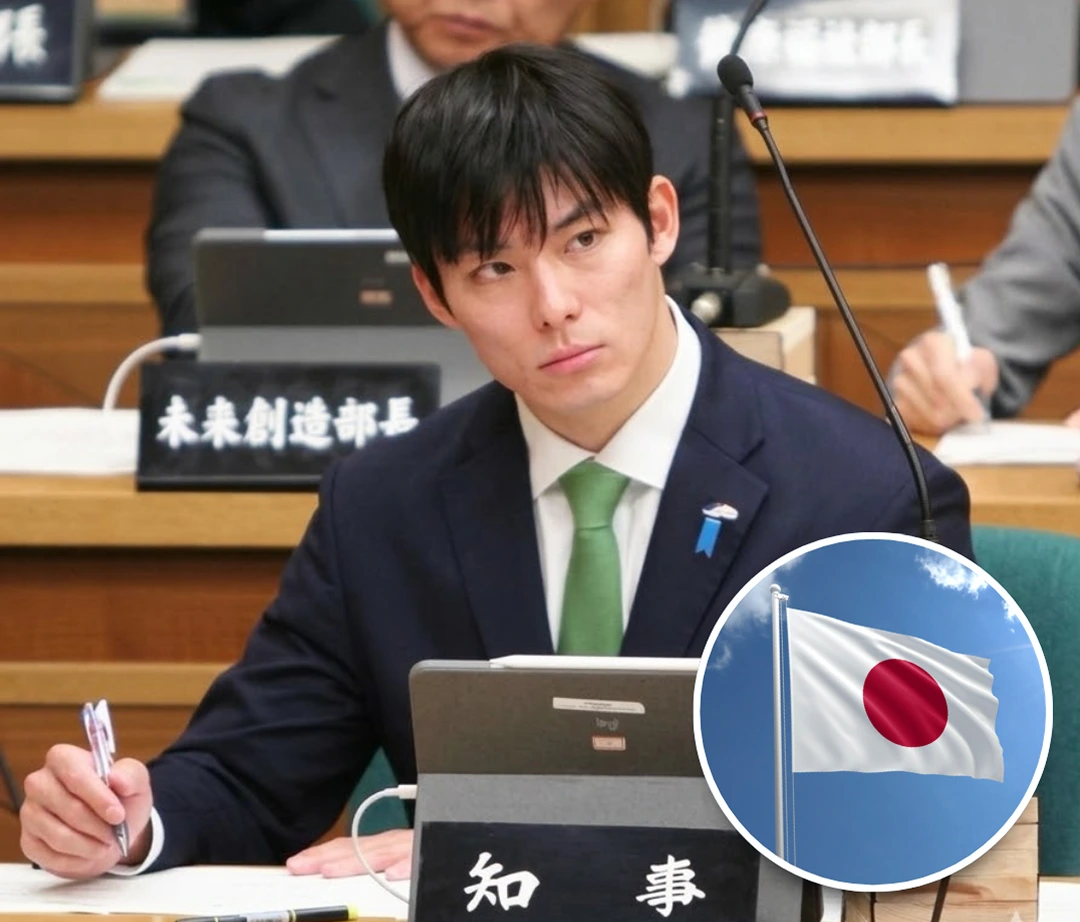
On January 25, Takato Ishida, 35, won the Fukui gubernatorial election, becoming the youngest incumbent prefectural governor in Japan.
He collected 134,620 votes, narrowly beating former Echizen city mayor Kenichi Yamada, who received 130,290 votes, in one of Japan’s most conservative prefectures.
Ishida holds two bachelor’s degrees along with a Master of Science in Foreign Service from Georgetown University.
He joined Japan’s Foreign Ministry in 2015 and later served as deputy consul at the Japanese Consulate-General in Melbourne before resigning in December 2025 to run for office.
During his campaign, Ishida pledged to expand child-rearing support and actively used social media to reach voters.
He also took a firm stance on immigration, expressing strong opposition to what he described as ‘disorderly immigration’ and calling for stricter controls on mass migration into Japan.
But his record and policy stance are not what have the internet buzzing. It is his looks, apparently.
Political opponents accused voters of populism, arguing his win was driven more by his wholesome image than actual policy. Netizens, however, did not seem too bothered by that argument.
Despite this, supporters see Ishida as a symbol of generational change and a sign of growing voter frustration with political elites.
At 35, he has become proof that Japan’s political landscape is shifting and that a new generation is ready to lead.

‘Golden’ from the hit animated film ‘KPop Demon Hunters’ just won Best Song Written for Visual Media at the 2026 Grammy Awards.
The win cements its place in music history as the first K-pop song ever to earn a Grammy.
Performed by EJAE with Audrey Nuna and Rei Ami, the song previously made chart impact by leading the Billboard Hot 100 for eight weeks.
Globally, it also topped the Billboard Global 200, remaining at number one for 20 weeks across the world.
‘Golden’ stood out among strong competitors, including songs from ‘TRON: Ares,’ ‘Sinners,’ and Elton John’s ‘Never Too Late.’
Beyond the win, the song also earned additional nominations for Song of the Year, Best Pop/Duo Performance, and Best Remixed Recording.
With its Grammy win secured, attention now shifts to the Academy Awards, where ‘KPop Demon Hunters’ competes in two major categories.
Fans and creators are hopeful that ‘Golden’ will continue its remarkable run, proving the song still has more milestones waiting ahead.
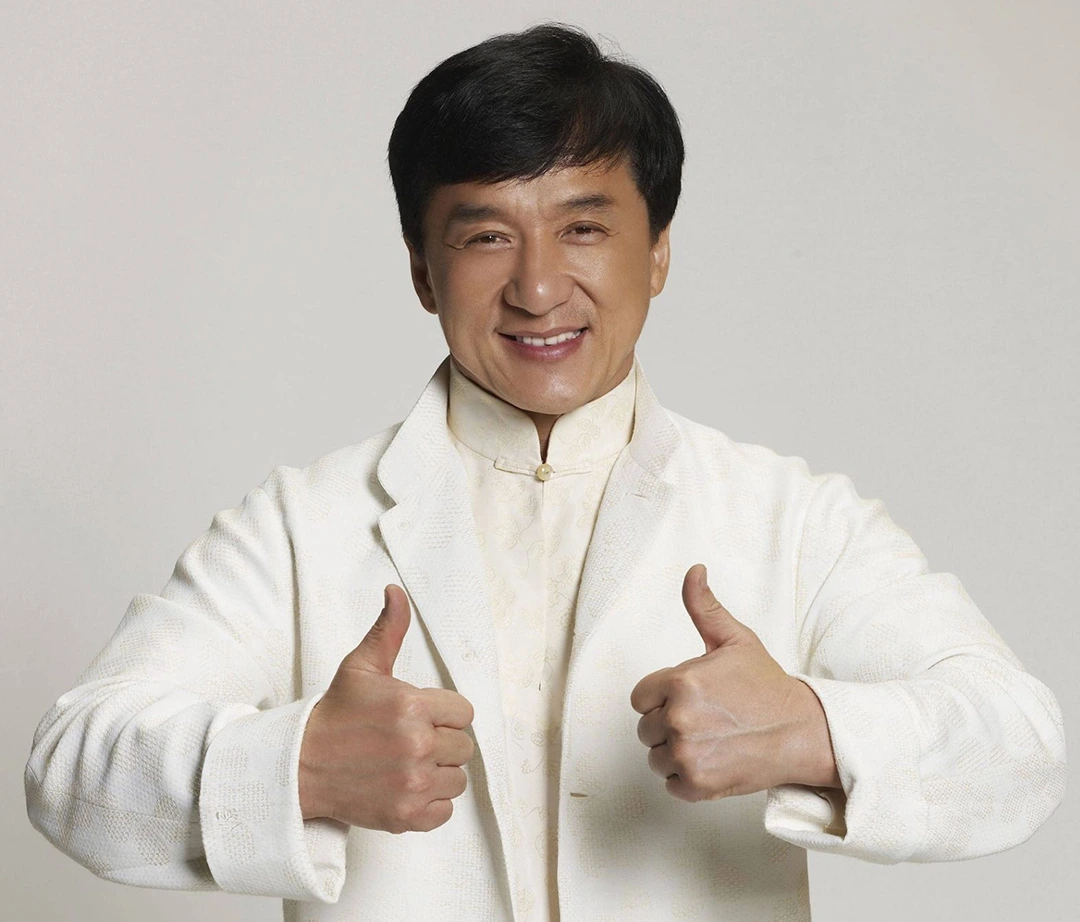
71-year-old Jackie Chan has moved fans worldwide after revealing he has already recorded a personal farewell song meant to be released on the day he passes away.
This emotional project serves as his last goodbye, ensuring his voice remains even when he is gone.
The announcement was shared last December 28 during the Beijing premiere of his latest drama, ‘Unexpected Family.’
Chan said the idea came after losing close friends and colleagues in recent years, which led him to reflect on aging, life’s fragility and the importance of expressing one’s feelings while there is still time.
Despite the audience’s curiosity, he refused to sing a single note. He explained that performing it now would only make people cry.
Instead, the track remains locked away, a private treasure waiting to offer comfort to the world on the day he finally rests.

‘Train to Busan’ Director Yeon Sang-ho on Designing the Zombies of Colony | AsianFeed

Can 9 People Guess Each Other’s Terrible Drawings? | Head of the Table

We Blindfolded 9 People and Made Them Find the Matcha | Head of the Table
-

 Music5 years ago
11 Southeast Asian Artists You Should Listen to Right Now
-

 Music2 years ago
THE BLACK LABEL’s First Girl Group, MEOVV, Set to Debut with Their Single ‘Meow’
-

 Culture5 years ago
OG Asian YouTubers That Defined Your Childhood
-

 Videos2 years ago
Get to Know Me: An-Li Bogan
-

 Culture2 years ago
Here’s a List of 10 Must-Watch Asian Romance Films to Watch This Valentine’s Day!
-

 Culture3 years ago
Remembering 9/11 Hero Betty Ong, the Flight Attendant That Alerted the World to the Events on Flight 11
-

 Videos1 year ago
K-Pop Demon Hunters Interview | Arden Cho, May Hong, and Ji-young Yoo
-

 Movies2 years ago
Demon Slayer ‘Infinity Castle Arc’ Trilogy Confirmed